四年級(jí)英語手抄報(bào)圖片大全
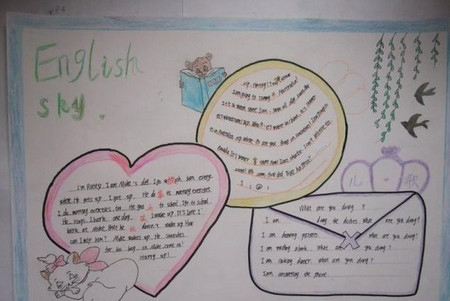
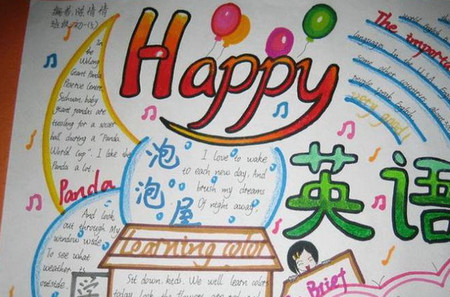
四年級(jí)英語手抄報(bào)圖片大全:英語介紹
英語(English),屬于“印歐語系-日耳曼語族-西日耳曼語支”。根據(jù)以英語作為母語的人數(shù)計(jì)算,英語是最多國家使用的官方語言,英語也是世界上最廣泛的第一語言,也是歐盟和許多國際組織和英聯(lián)邦國家的官方語言,擁有世界第三位的母語使用者人數(shù),僅次于漢語和西班牙語母語使用者人數(shù)。
英語由古代從丹麥等斯堪的納維亞半島以及德國、荷蘭及周邊移民至不列顛群島的盎格魯、撒克遜和朱特部落的白人所說的語言演變而來,并通過英國的殖民活動(dòng)傳播到了世界各地。由于在歷史上曾和多種民族語言接觸,它的詞匯從一元變?yōu)槎嘣Z法從“多屈折”變?yōu)椤吧偾邸保Z音也發(fā)生了規(guī)律性的變化。
在19至20世紀(jì),英國和美國在文化、經(jīng)濟(jì)、軍事、政治和科學(xué)在世界上的領(lǐng)先地位使得英語成為一種國際語言。如今,許多國際場(chǎng)合都使用英語做為溝通媒介。英語也是與電腦聯(lián)系最密切的語言,大多數(shù)編程語言都與英語有聯(lián)系,而且隨著網(wǎng)絡(luò)的使用,英文的使用更普及。英語是聯(lián)合國的工作語言之一。 一些人認(rèn)為低地蘇格蘭語是與英語最接近的一個(gè)獨(dú)立語言,而一些人則認(rèn)為它是英語的一個(gè)方言。與古英語最接近的是古弗里西語,這種語言現(xiàn)在仍在德國北部和荷蘭的弗里斯蘭省使用。蘇格蘭語、低地撒克遜語、丹麥語、德語、荷蘭語、南非荷蘭語和英語也很接近。擁有血統(tǒng)的法國的諾曼人于11世紀(jì)征服英格蘭王國,帶來數(shù)萬法語詞匯和拉丁語詞匯,很大程度地豐富了英語詞匯外,相對(duì)也驅(qū)使不少原生的語匯作廢。
四年級(jí)英語手抄報(bào)圖片大全:經(jīng)典英語小故事
A man was going to the house of some rich person. As he went along the road, he saw a box of good apples at the side of the road. He said, "I do not want to eat those apples; for the rich man will give me much food; he will give me very nice food to eat." Then he took the apples and threw them away into the dust.
He went on and came to a river. The river had become very big; so he could not go over it. He waited for some time; then he said, "I cannot go to the rich man's house today, for I cannot get over the river."
He began to go home. He had eaten no food that day. He began to want food. He came to the apples, and he was glad to take them out of the dust and eat them.
Do not throw good things away; you may be glad to have them at some other time.
經(jīng)典的英語小故事一翻譯
一個(gè)人正朝著一個(gè)富人的房子走去,當(dāng)他沿著路走時(shí),在路的一邊他發(fā)現(xiàn)一箱好蘋果,他說:“我不打算吃那些蘋果,因?yàn)楦蝗藭?huì)給我更多的食物,他會(huì)給我很好吃的東西。”然后他拿起蘋果,一把扔到土里去。
他繼續(xù)走,來到河邊,河漲水了,因此,他到不了河對(duì)岸,他等了一會(huì)兒,然后他說:“今天我去不了富人家了,因?yàn)槲也荒芏蛇^河。”
他開始回家,那天他沒有吃東西。他就開始去找吃的,他找到蘋果,很高興地把它們從塵土中翻出來吃了。
不要把好東西扔掉,換個(gè)時(shí)候你會(huì)覺得它們大有用處。
經(jīng)典的英語小故事二
An old woman had a cat. The cat was very old; she could not run quickly, and she could not bite, because she was so old. One day the old cat saw a mouse; she jumped and caught the mouse. But she could not bite it; so the mouse got out of her mouth and ran away, because the cat could not bite it.
Then the old woman became very angry because the cat had not killed the mouse. She began to hit the cat. The cat said, "Do not hit your old servant. I have worked for you for many years, and I would work for you still, but I am too old. Do not be unkind to the old, but remember what good work the old did when they were young."
經(jīng)典的英語小故事二翻譯
一位老婦有只貓,這只貓很老,它跑不快了,也咬不了東西,因?yàn)樗昙o(jì)太大了。一天,老貓發(fā)現(xiàn)一只老鼠,它跳過去抓這只老鼠,然而,它咬不住這只老鼠。因此,老鼠從它的嘴邊溜掉了,因?yàn)槔县堃Р涣怂?
于是,老婦很生氣,因?yàn)槔县垱]有把老鼠咬死。她開始打這只貓,貓說:“不要打你的老仆人,我已經(jīng)為你服務(wù)了很多年,而且還愿意為你效勞,但是,我實(shí)在太老了,對(duì)年紀(jì)大的不要這么無情,要記住老年人在年青時(shí)所做過的有益的事情。”

四年級(jí)英語手抄報(bào)圖片大全:英語經(jīng)典語句
1、Whatever is worth doing is worth doing well.
任何值得做的,就把它做好。
2、Happiness is a way station between too much and too little.
幸福是太多和太少之間的一站。
3、In love folly is always sweet.
戀愛中,干傻事總是讓人感到十分美妙。
4、The hard part isn’t making the decision. It’s living with it.
做出決定并不困難,困難的是接受決定。
5、Your happy passer-by all knows, my distressed there is no place hides.
你的幸福路人皆知,我的狼狽無處遁形。
6、You may be out of my sight, but never out of my mind.
你也許已走出我的視線,但從未走出我的思念。
7、Love is not a maybe thing. You know when you love someone.
愛不是什么可能、大概、也許,一旦愛上了,自己是十分清楚的。
8、In the end, it’s not the years in your life that count. It’s the life in your years.
到頭來,你活了多少歲不算什么,重要的是,你是如何度過這些歲月的。
9、When the whole world is about to rain, let’s make it clear in our heart together.
當(dāng)全世界約好一起下雨,讓我們約好一起在心里放晴。
10、It’s better to be alone than to be with someone you’re not happy to be with.
寧愿一個(gè)人呆著,(經(jīng)典語句 www.lz13.cn)也不要跟不合拍的人呆一塊。
- 手抄報(bào)

相關(guān)文章
更多>
網(wǎng)友評(píng)論
熱門關(guān)注
更多>- 懷孕 保養(yǎng)子宮健康,聰明女人都這么做|孕期睡眠|上環(huán)|產(chǎn)褥感染|刮宮|習(xí)慣性流產(chǎn)|習(xí)慣性流產(chǎn)|保胎
- 育兒 囟門|螨蟲|一歲寶寶身高體重表|寶寶受涼|完達(dá)山奶粉|寶寶肛門周圍紅|換牙時(shí)間表|兒童生長發(fā)育
- 早教 孩子叛逆期|爛布片|沒有畫的畫冊(cè)|薊的遭遇|民歌的鳥兒|區(qū)別|各得其所|風(fēng)車
- 營養(yǎng)美食 大蒜|杏仁|紅棗|檳榔|百合|山楂|洋蔥|花生
- 保健養(yǎng)生 乳房按摩有用嗎|婦科檢查包括哪些項(xiàng)目|爬山減肥|手腳冰涼|白醋泡腳的好處|手上長小水泡|私處洗液|手掌脫皮
- 生活用品 嬰兒車品牌|兒童積木|驅(qū)蚊手環(huán)|電子驅(qū)蚊器|兒童防曬霜|牙膠|嬰兒指甲鉗|孕婦吃魚肝油對(duì)寶寶好好嗎
 11:52
11:52
 14:16
14:16
 17:54
17:54
 17:05
17:05
 10:43
10:43
 10:52
10:52



還沒有人評(píng)論哦,趕緊搶一個(gè)沙發(fā)吧!